
If Ayurveda had to recommend just one daily habit, it might well be Abhyanga, massage with warm oil. Classical texts advise it every day, comparing the body to a pot that stays strong when oiled and to a cart axle that turns smoothly when lubricated. In Kerala, Abhyanga is also the foundation of many clinical treatments, from Panchakarma to neurological rehabilitation.
This guide explains what Abhyanga does, how a therapeutic Abhyanga at Greenwich Ayurveda Hospital, Kottakkal differs from a spa massage, and how to practise it at home.
What Is Abhyanga?
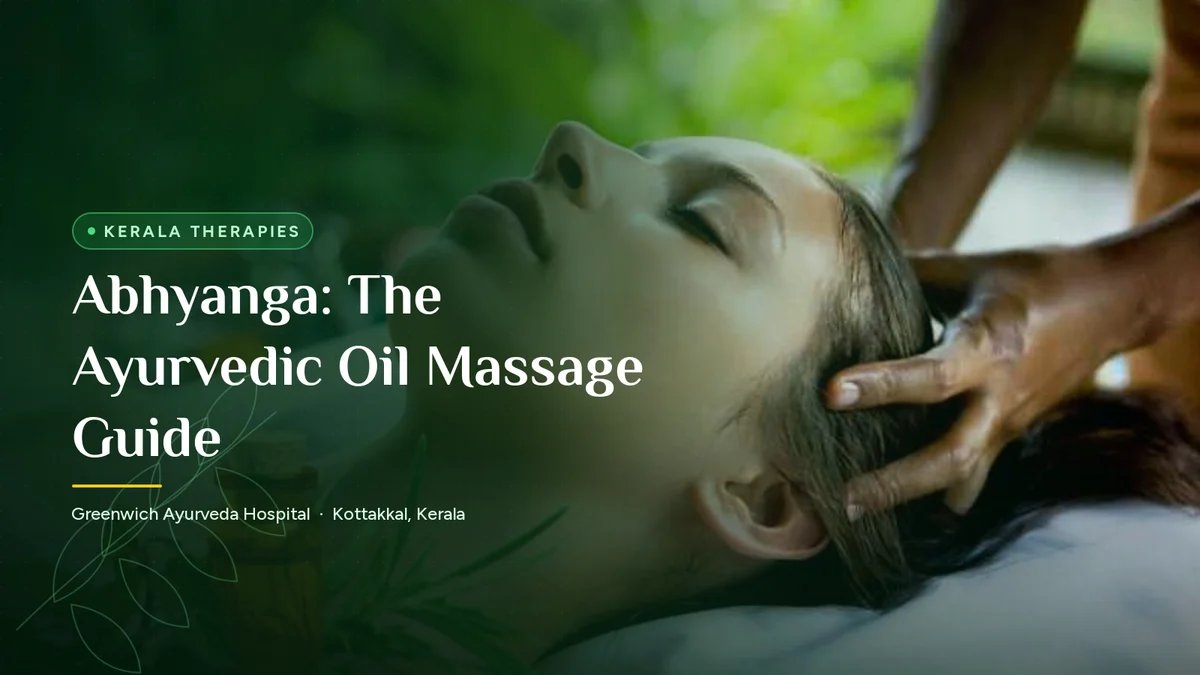
Abhyanga is a full-body massage with warm oil, usually medicated with herbs chosen for your constitution and condition. The strokes follow the direction of the body hair: long strokes on the limbs and circular movements over the joints, chest and abdomen. Traditionally, extra attention is given to the head, ears and feet.
Benefits of Abhyanga
Classical texts and generations of practice describe many benefits. Regular Abhyanga is traditionally used to:
- Calm the nervous system and reduce stress and anxiety
- Improve sleep quality
- Ease muscle stiffness and joint pain
- Nourish dry skin and improve its texture
- Support circulation
- Reduce fatigue and support strength and stamina
- Counter the effects of ageing, which Ayurveda links to rising Vata
It is especially beneficial for Vata imbalance, signs of which include dryness, anxiety, restlessness, insomnia, constipation and joint cracking.
Therapeutic Abhyanga vs Spa Massage
A spa massage aims to relax you for an hour. A therapeutic Abhyanga in a Kerala Ayurveda hospital is part of a medical plan:
- The oil is prescribed after a physician examines you. Ksheerabala, Dhanwantharam, Mahanarayana or other classical oils are chosen for your condition.
- The pressure and technique depend on your problem, age and strength.
- Two therapists often work in synchronised rhythm, which is a hallmark of Kerala practice.
- It is usually followed by Swedana, herbal steam that helps the oil penetrate and the channels open.
- It prepares the body for further therapies such as Kizhi, Pizhichil or Panchakarma.
Learn more about our Abhyangam therapy.
Choosing the Right Oil for Home Use
For self-massage, a few general guidelines (best confirmed with a physician):
- Vata (dry skin, feels cold, anxious, light sleeper): warm sesame oil, or Ashwagandha or Bala-based oils.
- Pitta (warm body, sensitive or reddish skin, intense): coconut oil, or cooling oils such as those with Chandana (sandalwood).
- Kapha (oily skin, heavy, slow, congested): lighter oils such as mustard or sunflower, used sparingly, or a dry powder massage (Udvartana) instead.
Always warm the oil gently, for example by placing the bottle in a bowl of hot water. Test the temperature on your wrist first.
A 15-Minute Self-Abhyanga Routine
Do this in the morning before your bath, in a warm room:
- Scalp: Pour a little warm oil onto your crown and massage the scalp with your fingertips in small circles.
- Face and ears: Massage your forehead, temples and cheeks with gentle upward strokes. Rub a little oil on the outer ears.
- Neck and shoulders: Use long strokes down the neck and circular strokes on the shoulders.
- Arms: Long strokes on the upper and lower arms, circles on the elbows and wrists.
- Chest and abdomen: Broad circles on the chest; gentle clockwise circles on the abdomen, following the direction of digestion.
- Back: Reach what you can of the back and lower back.
- Legs: Long strokes on the thighs and calves, circles on the knees and ankles.
- Feet: Spend a full minute or two on each foot, including the soles and toes.
- Rest for 10 to 15 minutes to let the oil soak in.
- Bathe in warm water, using a mild herbal powder or gentle soap.
Even a five-minute version, oiling only the head and feet, can make a noticeable difference to sleep and calm.
When to Avoid Abhyanga
Abhyanga is usually postponed during:
- Fever, cold, flu or acute infection
- Indigestion or immediately after a meal
- Active skin infections or open wounds
- Certain Kapha conditions with heaviness and congestion
If you have a medical condition or are pregnant, ask a physician before starting.
Who Benefits from Therapeutic Abhyanga Programmes?
At Greenwich Ayurveda, Abhyanga is part of treatment for:
- Chronic pain, back pain and sciatica, and knee osteoarthritis
- Neurological conditions such as stroke and Parkinson’s disease
- Insomnia, anxiety and stress
- Rejuvenation and healthy ageing
Experience Authentic Abhyanga in Kottakkal
A daily oil massage at home is a wonderful habit. A therapeutic course, with prescribed oils and trained Kerala therapists, takes the benefits much further. Contact us to plan your Abhyanga programme.
This article is for general information and does not replace an individual consultation.