Every parent of a child with cerebral palsy (CP) becomes an expert in patience, routines and small victories: the first time a hand opens fully, a few more steps with support, a calmer night’s sleep. Many families come to Kerala looking for therapies that can add to the progress they are already making with physiotherapy and their paediatrician.
At Greenwich Ayurveda Hospital, Kottakkal, our cerebral palsy treatment programme combines gentle classical Ayurvedic therapies with structured rehabilitation in a child-friendly setting.
Understanding Cerebral Palsy
Cerebral palsy is a group of conditions caused by injury to, or abnormal development of, the developing brain before, during or shortly after birth. It mainly affects movement, muscle tone and posture, and some children also have challenges with speech, swallowing, vision, learning or seizures.
The brain injury itself does not get worse over time, but the effects on muscles and joints can change as a child grows. This is why consistent, long-term therapy matters so much.
Common types of cerebral palsy
- Spastic CP: stiff, tight muscles; the most common type.
- Dyskinetic CP: involuntary, uncontrolled movements.
- Ataxic CP: problems with balance and coordination.
- Mixed CP: features of more than one type.
How Ayurveda Approaches Cerebral Palsy
Ayurveda views most CP presentations as disorders of Vata, the dosha governing movement and the nervous system, combined with weakness of the nervous tissue (Majja Dhatu) and muscles (Mamsa Dhatu). The approach is gentle and nourishing, and it is always adapted to the child’s age, weight and tolerance.
The goals are to:
- Reduce spasticity and stiffness so that physiotherapy becomes easier and more effective
- Nourish and strengthen weak muscles
- Support digestion, appetite, bowel movements and sleep
- Calm irritability and improve attention during therapy
Ayurvedic Therapies Commonly Used for Children with CP
Abhyanga (gentle oil massage)
Warm, medicated oils such as Bala-based preparations are massaged with child-appropriate pressure. Massage relaxes tight muscles and is often a comforting, bonding experience. See Abhyangam.
Njavarakizhi
Small cloth boluses filled with medicated Njavara rice cooked in milk and herbal decoction are applied warm over the body. This is one of the most valued Kerala therapies for muscle wasting and weakness in children. Learn about Njavarakizhi.
Pizhichil (adapted)
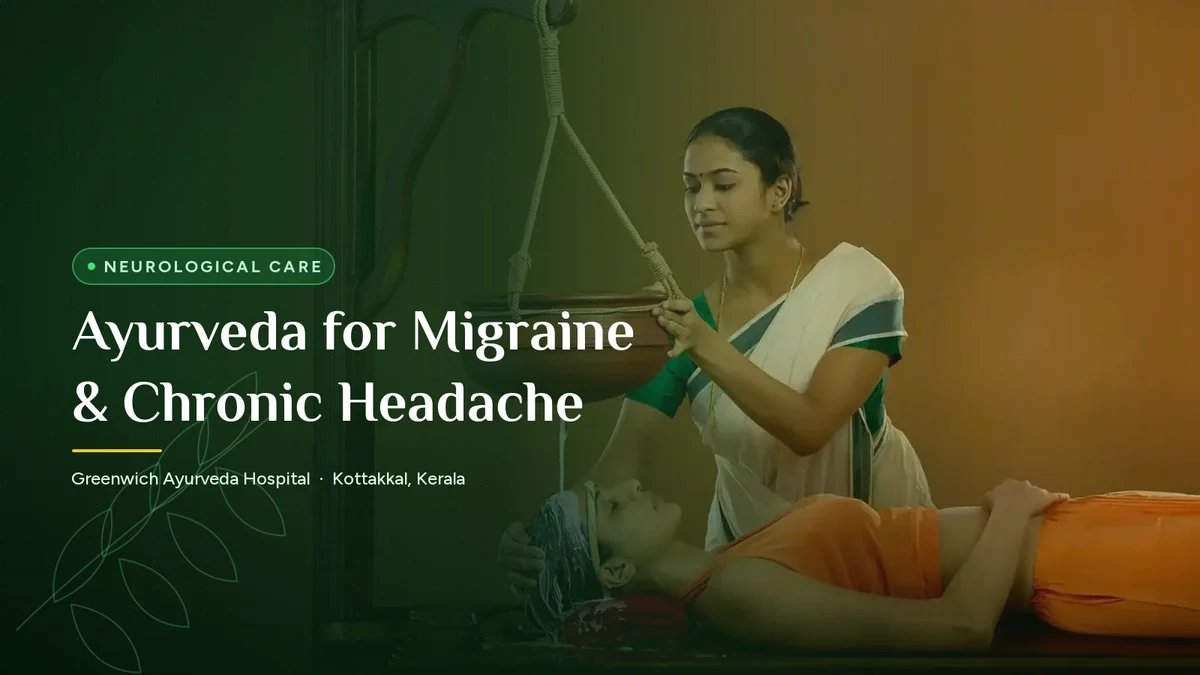
Warm medicated oil is poured gently over the body while it is softly massaged. For children, duration and temperature are carefully adjusted. See Pizhichil.
Shirodhara and Thalapothichil
Medicated liquids poured on the forehead, or a cooling herbal paste applied to the scalp, are traditionally used to calm the nervous system, ease irritability and improve sleep.
Vasti (medicated enema), when appropriate
Mild, age-appropriate Vasti preparations may be used to pacify Vata, especially where constipation is a problem, which is common in children with CP.
Internal medicines
Child-safe herbal formulations such as medicated ghee preparations may be prescribed to support nourishment and development. These are always dosed carefully by weight and age.
Physiotherapy: The Essential Partner
Ayurvedic therapies make muscles more relaxed and receptive. That window is best used for active rehabilitation. Our physiotherapy team works on:
- Head and trunk control, sitting balance and standing
- Stretching to prevent contractures
- Gait training with or without aids
- Fine motor activities for hand use
- Positioning advice for sleeping, sitting and feeding
We also train parents so that the right exercises continue at home every day, because the hours at home matter as much as the hours in therapy.
What Can Parents Realistically Expect?
We believe honest expectations protect families. Ayurveda does not repair the original brain injury, and it is not a cure for cerebral palsy. With a consistent combined programme, families commonly work towards:
- Reduced stiffness and easier handling and dressing
- Better tolerance and participation in physiotherapy
- Improved sitting, standing or walking ability, depending on the child’s starting point
- Better appetite, digestion and bowel habits
- Calmer behaviour and improved sleep
Children who start therapy younger often show greater gains, because the developing brain is more adaptable. Progress, however, is possible at many ages.
How Long Is a Treatment Programme?
A typical in-patient programme lasts 14 to 28 days, depending on the child’s needs and tolerance. Because CP is a long-term condition, many families plan two to three programmes a year, with home exercises and medicines in between.
Preparing Your Child for the Programme
- Bring all medical records, including MRI reports, seizure history and current medicines.
- Continue anti-seizure and other prescribed medicines. Do not stop any medicine without your doctor’s approval.
- Pack familiar toys and comfort items to help your child settle in.
- Plan for a parent or caregiver to stay with the child throughout the programme.
- Write down your goals, such as sitting without support or holding a spoon, so we can plan around what matters to your family.
Why Families Choose Greenwich Ayurveda, Kottakkal
- Physician-supervised paediatric Ayurvedic care
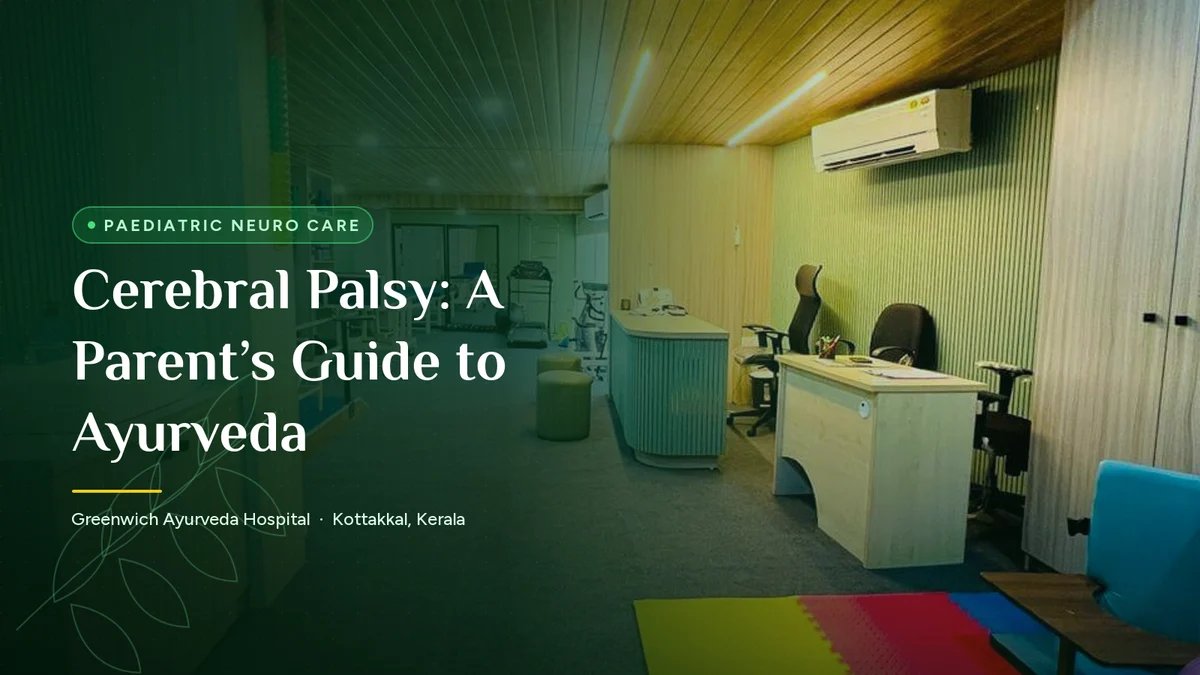
- A dedicated child-friendly therapy space with integrated physiotherapy
- Experienced therapists trained in gentle Kerala neuro-therapies
- Comfortable family accommodation within the hospital
- A team that coordinates with your child’s paediatrician and neurologist
Every child’s journey is unique. Contact our team to discuss your child’s needs, or read more about our wider neurological disorder treatment.
This article is for general information and does not replace advice from your child’s doctors. All treatment decisions are made after an in-person assessment.