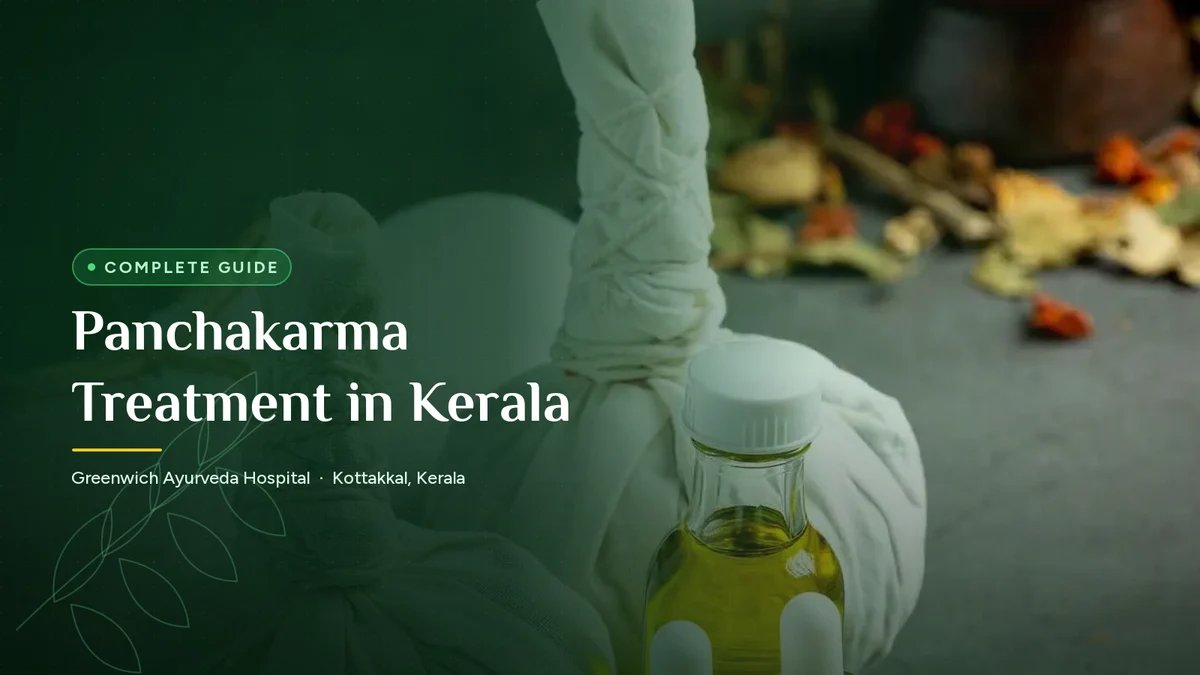
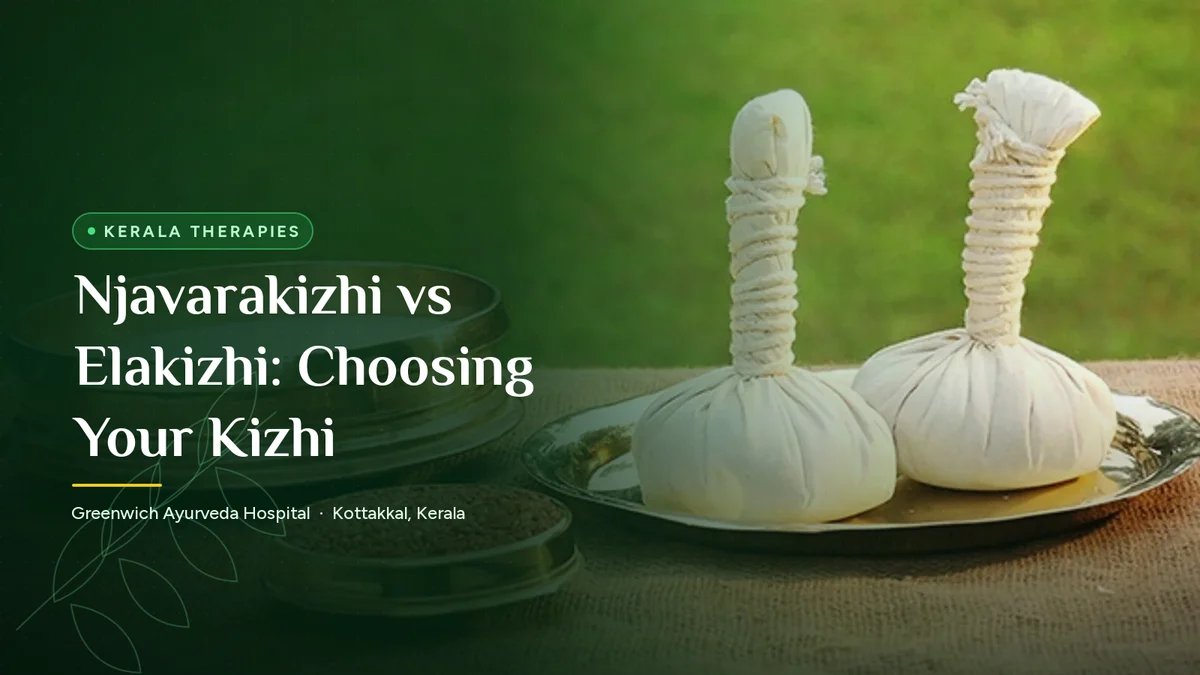
If you have explored Kerala Ayurveda, you have probably come across the word Kizhi (pronounced ki-zhi). It refers to warm herbal boluses, cloth bundles filled with medicinal ingredients, that are heated and applied to the body with rhythmic pressure and massage. It is one of the most distinctive and effective forms of Swedana (sudation or fomentation therapy) in Ayurveda.
But the filling of the bolus changes everything. A Kizhi made with leaves acts very differently from one made with milk-cooked rice. At Greenwich Ayurveda Hospital, Kottakkal, our physicians choose the type of Kizhi based on your condition, your dosha imbalance and your strength.
How Kizhi Therapy Works
Most Kizhi sessions follow a similar pattern:
- A gentle full-body or local oil massage (Abhyanga) with medicated oil
- The boluses are heated in warm oil, milk decoction or on a pan
- Therapists apply the boluses with rhythmic tapping and circular movements, often working in pairs for a synchronised rhythm
- A rest period follows, then a warm bath
A session usually lasts 45 to 60 minutes. The combination of heat, herbs, oil and pressure relieves pain, reduces stiffness and improves circulation.
1. Elakizhi (Patra Pinda Sweda): Leaf Bolus Therapy
What it is: Fresh medicinal leaves such as Nirgundi (Vitex negundo), castor, tamarind and drumstick are chopped and fried with grated coconut, lemon, rock salt and herbs, then tied into boluses.
Best suited for:
- Joint pain and stiffness, including osteoarthritis
- Back pain, neck pain and frozen shoulder
- Sports injuries and muscle spasms
- Conditions with pain and swelling
Nature: Warming, pain-relieving and anti-inflammatory. It is one of the most frequently used Kizhis for musculoskeletal pain.
Learn more: Elakizhi treatment.
2. Njavarakizhi (Shashtika Shali Pinda Sweda): Rice Bolus Therapy
What it is: Njavara, a medicinal rice variety native to Kerala, is cooked in cow’s milk and a decoction of Bala (Sida cordifolia). It is tied into boluses that are repeatedly dipped in the warm milk-herb mixture and massaged over the body.
Best suited for:
- Muscle wasting and weakness
- Neurological conditions such as stroke recovery, cerebral palsy and muscular dystrophy
- General debility, fatigue and recovery after long illness
- Rejuvenation and anti-ageing programmes
Nature: Deeply nourishing (Brimhana) and strengthening rather than reducing. It is one of Kerala’s most prized rejuvenation therapies.
Learn more: Njavarakizhi treatment.
3. Podikizhi (Churna Pinda Sweda): Herbal Powder Bolus Therapy
What it is: Boluses filled with dry herbal powders, heated on a pan with a little medicated oil or sometimes applied dry.
Best suited for:
- Conditions with stiffness and heaviness, especially with Kapha or Ama involvement
- Inflammatory joint conditions where oily therapies are not yet suitable, such as some cases of rheumatoid arthritis (Amavata)
- Swelling and heaviness of the limbs
Nature: Drying and reducing (Rooksha), helping to clear heaviness and stiffness.
4. Manalkizhi (Valuka Sweda): Sand Bolus Therapy
What it is: Boluses filled with heated sand, applied dry.
Best suited for: Kapha conditions and inflammatory joint stiffness, particularly where swelling and heaviness are prominent and oil should be avoided.
Quick Comparison
- Elakizhi: fresh leaves; warming and pain-relieving; best for joint and muscle pain.
- Njavarakizhi: milk-cooked medicinal rice; nourishing and strengthening; best for weakness, wasting and neuro-rehabilitation.
- Podikizhi: herbal powders; drying; best for stiffness with heaviness and early inflammatory conditions.
- Manalkizhi: heated sand; dry heat; best for Kapha-type swelling and stiffness.
Which Kizhi Is Right for You?
This is a medical decision, not a menu choice. The same knee pain can need Podikizhi in one person and Elakizhi in another, depending on whether there is active inflammation, swelling or dryness. Your physician will consider:
- Your symptoms and their stage (acute or chronic)
- Your Prakriti and current dosha imbalance
- Your digestion and the presence of Ama
- Your age, strength and any other medical conditions
Often, a programme moves from one Kizhi to another. For example, a patient may begin with Podikizhi to reduce heaviness and inflammation, and later move to Elakizhi or Njavarakizhi to relieve pain and rebuild strength.
How Many Sessions Do You Need?
Kizhi is usually given as a course of 7, 14 or 21 days, typically as part of a broader plan that may include internal medicines, Vasti or Pizhichil.
Is Kizhi Safe?
When performed by trained therapists under medical supervision, Kizhi is very safe. Temperature is checked constantly to avoid burns. It is generally avoided during fever, acute infection, open wounds or on skin with active eruptions, and adjusted carefully for people with diabetes who may have reduced sensation.
Experience Authentic Kizhi in Kottakkal
At Greenwich Ayurveda, every Kizhi bolus is freshly prepared with classical ingredients, and every session follows a physician’s prescription. Contact us to find out which therapy is right for your condition.
This article is for general information and does not replace an individual consultation.