
You are exhausted, yet the moment your head touches the pillow your mind starts racing. You wake at 3 a.m. and cannot fall asleep again. By morning you feel unrested, irritable and foggy. Insomnia and anxiety feed each other, and for many people they have become a nightly cycle.
At Greenwich Ayurveda Hospital, Kottakkal, we help patients break this cycle with classical Kerala therapies, herbal support and practical changes to daily routine.
Why Sleep Matters So Much in Ayurveda
Ayurveda calls sleep (Nidra) one of the three pillars of life, alongside food (Ahara) and balanced living (Brahmacharya). Classical texts say that good sleep brings strength, healthy weight, clarity and long life, while poor sleep brings weakness, dullness and disease. In other words, sleep is treated as medicine, not as an optional extra.
How Ayurveda Explains Insomnia and Anxiety
Ayurveda describes insomnia as Anidra or Nidranasha. It is mainly linked to aggravated Vata, the dosha of movement, and sometimes Pitta, the dosha of heat and intensity.
- Vata-type sleeplessness: difficulty falling asleep, a racing mind, worry, light and broken sleep, often with dryness and constipation.
- Pitta-type sleeplessness: waking around midnight to 2 a.m., feeling hot, irritable or driven, with intense thoughts about work.
Common triggers include irregular routines, late-night screens, excessive travel, overwork, skipping meals, too much caffeine and long-term stress.
When to See a Doctor First
Long-standing insomnia can be linked to depression, thyroid problems, sleep apnoea, chronic pain and other medical conditions. If you snore loudly and wake gasping, feel persistently hopeless, or have thoughts of harming yourself, please seek medical help promptly. Do not stop prescribed sleep or anxiety medicines suddenly; any reduction should be planned with your doctor.
Kerala Head Therapies for Sleep and Calm
The head is considered the seat of the senses and the mind. Kerala Ayurveda has developed several specialised therapies for it.
Shirodhara
A continuous, gentle stream of warm medicated oil, milk or buttermilk is poured over the forehead for 30 to 45 minutes. It is one of the best-known therapies for stress, anxiety and insomnia. Read our detailed guide to the best Shirodhara in Kerala and our Shirodhara therapy page.
Shirovasti
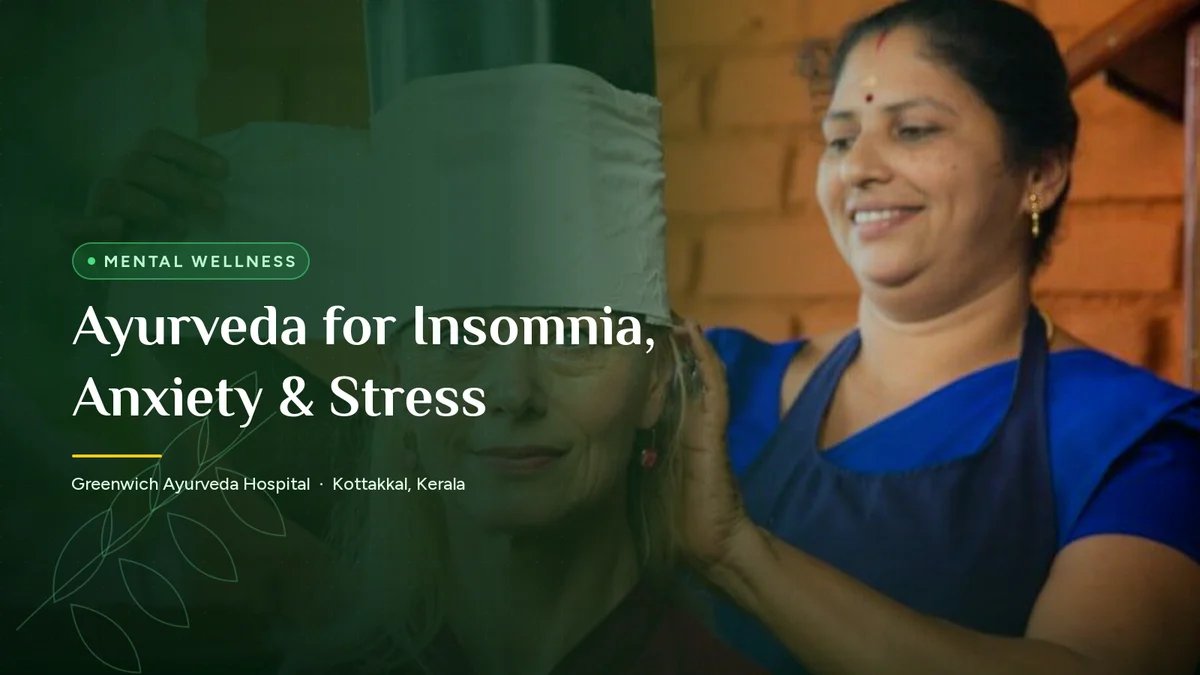
Warm medicated oil is held over the scalp inside a tall leather cap for a set time. It is considered the most intensive of the head therapies and is used for severe sleeplessness and Vata disorders of the head. See Shirovasti.
Thalapothichil
A cooling paste of herbs mixed with medicated buttermilk is applied to the scalp and covered with leaves. It is especially useful for Pitta-type insomnia, heat and irritability.
Shiro Abhyanga and Padabhyanga
Simple oil massage of the head and of the feet before bed is one of the most effective home practices for calming the mind.
Abhyanga and Nasya
Full-body Abhyanga grounds Vata, while Nasya is traditionally used to support clarity of the head and senses.
Herbs Traditionally Used for Sleep and Calm
- Ashwagandha: traditionally used for stress and restful sleep
- Brahmi: traditionally used for a calm, clear mind
- Jatamansi: traditionally used for sleep and restlessness
- Shankhapushpi: traditionally used as a mind tonic
These should be chosen by a physician, especially if you take other medicines for sleep, mood or blood pressure.
An Ayurvedic Evening Routine for Better Sleep
- Eat dinner early and light, ideally two to three hours before bed.
- Switch off screens an hour before sleep. Blue light and stimulating content keep the mind active.
- Massage warm oil into your scalp and the soles of your feet for five minutes.
- Drink a cup of warm milk with a pinch of nutmeg or cardamom, if milk suits you.
- Practise slow breathing, such as alternate-nostril breathing (Nadi Shodhana), for five to ten minutes.
- Keep your bedroom cool, dark and quiet.
- Go to bed by about 10 p.m. Ayurveda considers the hours before midnight the most restorative.
- Wake at the same time every day, even after a poor night.
During the Day
- Get morning sunlight and some physical activity.
- Limit tea and coffee, especially after noon.
- Avoid long daytime naps, which can make night sleep harder.
- Eat regular, warm meals; skipping meals aggravates Vata.
How Long Does Treatment Take?
A focused programme of 7 to 14 days of head therapies, oil massage, herbal medicines and routine correction helps many people re-establish healthy sleep. Long-standing insomnia may need longer support. Most people notice they fall asleep more easily and wake less tired within the first week, although every person responds differently.
Rest Deeply Again
If sleepless nights are affecting your health, mood and work, our physicians can design a calming programme for you. Contact us to plan your stay in Kottakkal.
This article is for general information. If you have severe anxiety, depression or thoughts of self-harm, please seek professional medical help immediately.