
If you live with migraine, you know it is not "just a headache". It can come with throbbing pain on one side of the head, nausea, sensitivity to light and sound, and visual disturbances. An attack can last hours or days and leave you drained afterwards. Many people plan their lives around avoiding the next one.
At Greenwich Ayurveda Hospital, Kottakkal, we treat migraine and chronic headache by looking at the whole person: digestion, sleep, stress, diet and the specific pattern of the headaches.
Migraine or Another Type of Headache?
- Migraine: usually one-sided, throbbing pain, often with nausea, vomiting and sensitivity to light and sound. Some people have an aura, such as flashing lights or zigzag lines, before the pain.
- Tension-type headache: a band-like pressure around the head, often linked to stress, posture and neck tension.
- Cervicogenic headache: pain starting from the neck, often with cervical spondylosis.
- Sinus-related headache: pressure around the forehead and cheeks with nasal congestion.
The right treatment depends on the type, so a proper assessment comes first.
Warning signs: seek urgent medical care
Get emergency help for a sudden, severe "worst-ever" headache, headache with fever and a stiff neck, headache after a head injury, or headache with weakness, confusion, loss of vision, slurred speech or a seizure. New headaches after the age of 50, or headaches that steadily worsen, also need medical evaluation.
Common Migraine Triggers
- Irregular sleep, too little or too much
- Skipping meals or long gaps without food
- Stress, and the "let-down" after stress, such as weekends
- Bright light, loud noise and strong smells
- Hormonal changes around periods
- Dehydration and hot weather
- Certain foods and drinks, such as aged cheese, chocolate, alcohol and excess caffeine
- Long screen time and poor posture
Keeping a headache diary for a month, noting sleep, meals, stress, periods and attacks, often reveals your personal pattern.
How Ayurveda Understands Migraine
Ayurveda describes one-sided headache as Ardhavabhedaka, literally "pain in half of the head", and also describes Suryavarta, a headache that rises and falls with the sun. These are understood mainly as disorders of Vata and Pitta, sometimes with Kapha, affecting the head (Shiras).
- Pitta-type migraine: burning, intense pain, triggered by heat, sun, hunger, spicy food and anger, often with nausea or acidity.
- Vata-type migraine: throbbing, variable pain linked to irregular routine, travel, poor sleep, anxiety and skipped meals.
- Kapha-type headache: dull, heavy pain, often with congestion, worse in the morning.
Ayurveda pays special attention to digestion and acidity, since many migraine sufferers notice attacks linked to indigestion.
Ayurvedic Treatments for Migraine
Nasya
Medicated oil or herbal preparations instilled into the nostrils are described in classical texts as the primary treatment for diseases of the head. Nasya is a cornerstone of migraine care. See Nasyam treatment.
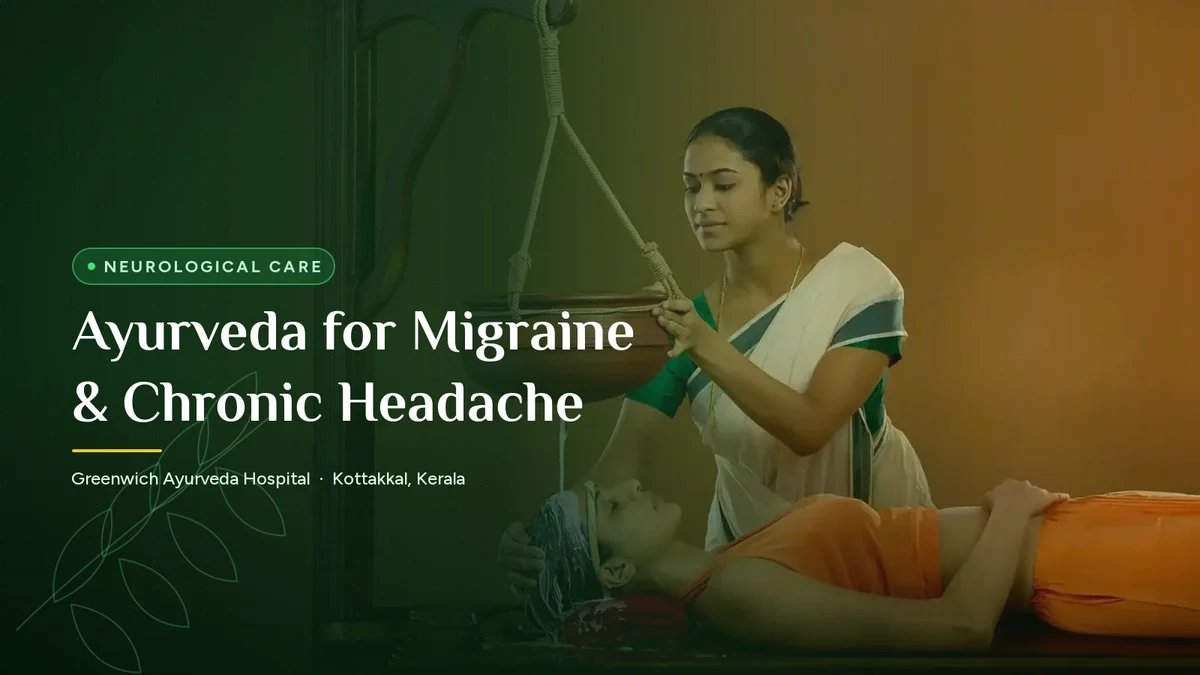
Shirodhara
A steady stream of warm oil, or cooling medicated milk or buttermilk for Pitta-type migraine, is poured over the forehead to calm the nervous system and reduce stress-related attacks. See Shirodhara.
Shirovasti and Thalapothichil
Medicated oil held over the scalp (Shirovasti) or a cooling herbal paste on the head (Thalapothichil) are used for chronic and severe cases.
Virechana
For Pitta-dominant migraine with acidity and heat, therapeutic purgation as part of Panchakarma is traditionally used to clear excess Pitta.
Abhyanga and neck therapies
Oil massage of the head, neck and shoulders, along with Elakizhi for neck tension, helps when headaches are linked to posture and muscle tightness.
Internal medicines
Classical preparations are prescribed to calm Vata and Pitta, support digestion and reduce the frequency of attacks.
Lifestyle Habits That Reduce Migraine
- Keep regular sleep and wake times, including at weekends.
- Never skip breakfast, and avoid long gaps between meals.
- Drink enough water, especially in hot weather.
- Limit caffeine, and avoid sudden withdrawal.
- Avoid direct midday sun; wear sunglasses and a hat outdoors.
- Take regular screen breaks and set your screen brightness comfortably.
- Practise calming breathing such as Sheetali (cooling breath) or Nadi Shodhana daily.
- Eat fresh, simple, mildly spiced food, and limit fried, very sour and fermented foods if they trigger you.
What Results Can You Expect?
A course of 7 to 14 days, followed by home medicines and lifestyle changes, often helps patients experience fewer and milder attacks. Migraine is a long-term tendency, so consistent habits matter as much as therapy. Continue any preventive medicines your doctor has prescribed until you discuss changes with them.
Take Back Your Days
If migraines are disrupting your work and family life, book a consultation with our physicians in Kottakkal. Bring your headache diary if you have one; it helps us personalise your plan.
This article is for general information. Sudden severe headache or headache with neurological symptoms needs emergency medical care.