
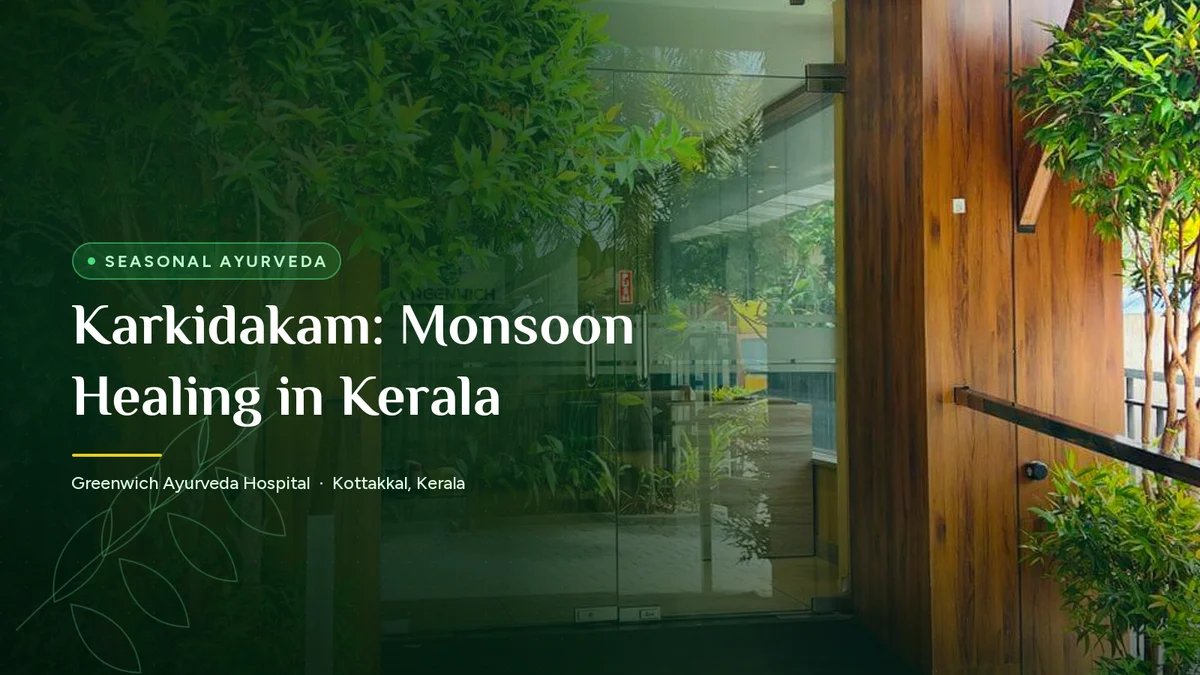
In Kerala, the monsoon is more than a season. The Malayalam month of Karkidakam, roughly mid-July to mid-August, has for generations been treated as a time to slow down, eat simply and care for the body. Families prepare special herbal rice gruel, older people undergo oil therapies, and Ayurveda hospitals become especially busy.
But is this just tradition, or is there a reason behind it? At Greenwich Ayurveda Hospital, Kottakkal, we explain the logic to our patients, because understanding why helps you get more from treatment.
The Ayurvedic Logic of the Monsoon
Ayurveda follows Ritucharya, the science of seasonal living. Each season affects the doshas differently:
- During the hot, dry summer, Vata accumulates in the body.
- When the monsoon arrives, the cool, damp weather and weakened digestion aggravate Vata and allow Pitta and Kapha to build up too.
- Agni (digestive fire) becomes weak during the rains. This is why people often feel sluggish, bloated or achy, and why joint pains and colds tend to flare.
Ayurveda therefore sees the monsoon as the right time to correct imbalance before it settles into disease. The cool, moist climate is also thought to help the body absorb medicated oils better, and the pores open readily with gentle warmth, making therapies more effective.
Why Karkidakam Is Called the Month of Healing
Traditionally, monsoon also meant less agricultural work and more time at home. Combined with the Ayurvedic understanding of seasonal vulnerability, Karkidakam naturally became the season for Karkidaka Chikitsa, a dedicated period of cleansing and rejuvenation.
Therapies Commonly Used During the Monsoon
The plan always depends on your health and constitution, but monsoon programmes often include:
- Panchakarma, especially Vasti, which is considered the best treatment for Vata and is particularly favoured in this season. See our Panchakarma programme and our complete Panchakarma guide.
- Abhyanga: daily warm oil massage to counter Vata’s dryness and stiffness. See Abhyangam.
- Kizhi therapies: Elakizhi for pain and stiffness, Njavarakizhi for nourishment and strength.
- Pizhichil: the classical "oil bath" for deep rejuvenation. See Pizhichil.
- Shirodhara: to calm the mind and improve sleep. See Shirodhara.
- Nasya: to clear the head and sinuses, helpful in the damp season. See Nasyam.
- Rasayana: rejuvenative medicines after cleansing. See Rasayana Chikitsa.
Karkidaka Kanji: Kerala’s Monsoon Medicine Food
One of the most loved Karkidakam traditions is Karkidaka Kanji (also called Marunnu Kanji, "medicine gruel"). It is a rice porridge, often made with Njavara rice, cooked with a blend of medicinal herbs, spices such as fenugreek, cumin and dried ginger, and finished with coconut milk.
It is light, warming and easy to digest, which is exactly what weakened monsoon digestion needs. It is traditionally taken for 7 to 14 days, along with a simple diet.
Who Benefits Most from Monsoon Treatment?
- People with joint pain, arthritis, back pain or neck pain, which often worsen in the rains
- Those with neurological conditions such as stroke, Parkinson’s and neuropathy, where Vata balance is central
- People with digestive complaints, fatigue or low immunity
- Anyone who wants preventive rejuvenation and a reset from stress
- Busy professionals looking for a genuine detox and recharge
Monsoon Diet and Lifestyle Tips
- Eat warm, freshly cooked, light meals. Avoid heavy, fried and stale food.
- Drink boiled warm water, or water boiled with dried ginger or cumin.
- Avoid raw salads, cold drinks and curd at night, as digestion is weaker in the rains.
- Avoid daytime sleep and getting drenched in rain.
- Keep your feet dry and warm.
- Practise daily self-massage with warm oil before bathing.
How Long Should a Monsoon Programme Be?
- 7 days: a short rejuvenation and Karkidaka Kanji programme for healthy adults.
- 14 days: the most popular choice for stress, mild pain and seasonal cleansing.
- 21 to 28 days: for chronic pain, spine and neurological conditions.
Plan Early
Monsoon is the busiest season at Kerala Ayurveda hospitals, so booking well in advance is wise, especially for international visitors and families from the Gulf whose summer holidays coincide with the rains. See our guide for international patients.
To plan your Karkidakam treatment at Greenwich Ayurveda, Kottakkal, contact our team.
This article is for general information. Treatment plans are individualised after consultation.