A diagnosis of motor neuron disease (MND), including its most common form, amyotrophic lateral sclerosis (ALS), changes everything for a family. It is a progressive condition in which the nerve cells that control voluntary muscles gradually stop working. Walking, hand use, speech, swallowing and eventually breathing can all be affected.
We want to be clear from the very first paragraph: there is currently no cure for MND, in modern medicine or in Ayurveda. Anyone who promises one is not being honest with you. What good care can do is help preserve function for as long as possible, ease discomfort and support the whole family. That is the goal of our motor neuron disease care at Greenwich Ayurveda Hospital, Kottakkal.
Understanding Motor Neuron Disease
Motor neurons carry signals from the brain and spinal cord to the muscles. When they degenerate, muscles weaken and waste. Common early signs include:
- Weakness in a hand, arm or leg, such as difficulty with buttons or tripping
- Muscle twitching (fasciculations) and cramps
- Slurred speech or difficulty swallowing in some forms
- Unexplained weight loss due to muscle wasting
- Fatigue
The pace and pattern of progression vary widely from person to person.
Where Ayurveda Fits In
In Ayurvedic terms, MND is understood as a severe Vata disorder with depletion of the muscle tissue (Mamsa Dhatu) and nervous tissue (Majja Dhatu). Treatment is therefore nourishing (Brimhana) rather than depleting. Harsh cleansing procedures are generally avoided in weak patients.
The supportive aims are to:
- Maintain muscle strength and flexibility for as long as possible
- Reduce cramps, stiffness and body pain
- Support appetite, digestion and nutrition
- Improve sleep and reduce anxiety
- Provide comfort and dignity at every stage
Supportive Ayurvedic Therapies
Abhyanga (gentle oil massage)
Warm, nourishing oils are massaged with gentle pressure to relieve cramps and stiffness, improve circulation and comfort. See Abhyangam.
Njavarakizhi
Boluses of medicated Njavara rice cooked in milk and herbs are one of Kerala Ayurveda’s classic nourishing therapies for muscle wasting. See Njavarakizhi.
Pizhichil
A continuous flow of warm medicated oil with soft massage, traditionally used to nourish and strengthen the body. See Pizhichil.
Shirodhara
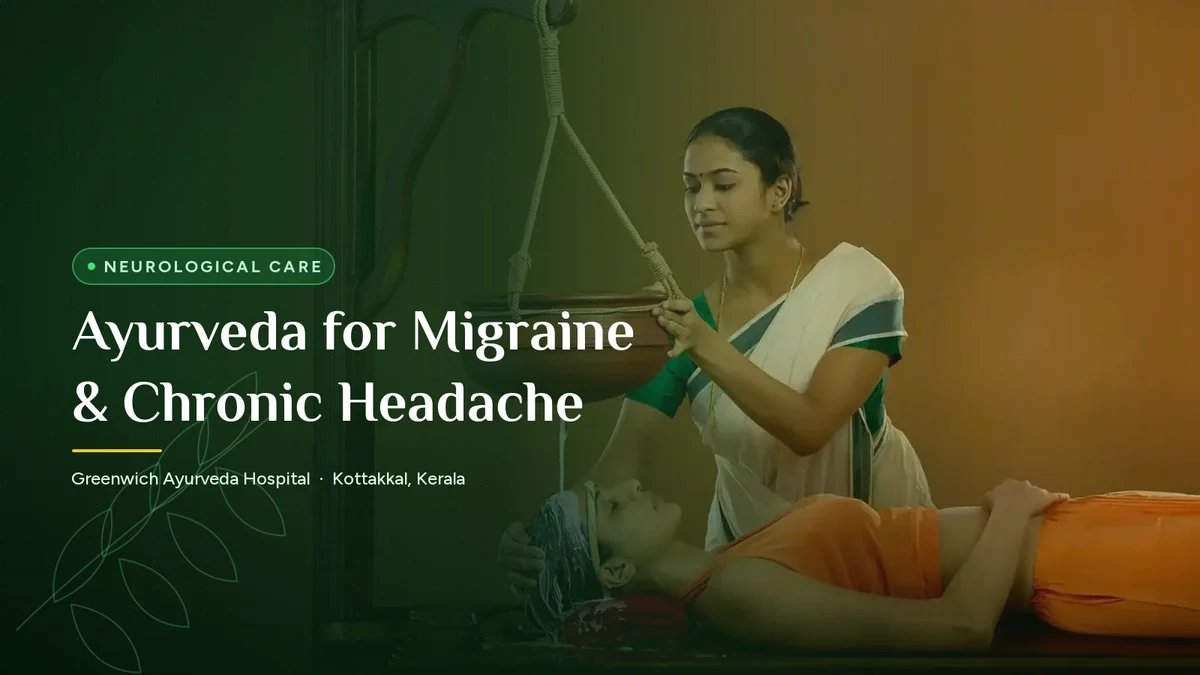
Warm oil poured gently over the forehead to calm anxiety and support sleep, which are often deeply affected after diagnosis. See Shirodhara.
Mild, nourishing Vasti and Rasayana medicines
Where appropriate, oil-based Vasti and rejuvenative (Rasayana) medicines are used to support strength and vitality. All treatments are adapted carefully to the patient’s energy levels.
Rehabilitation, Nutrition and Safety
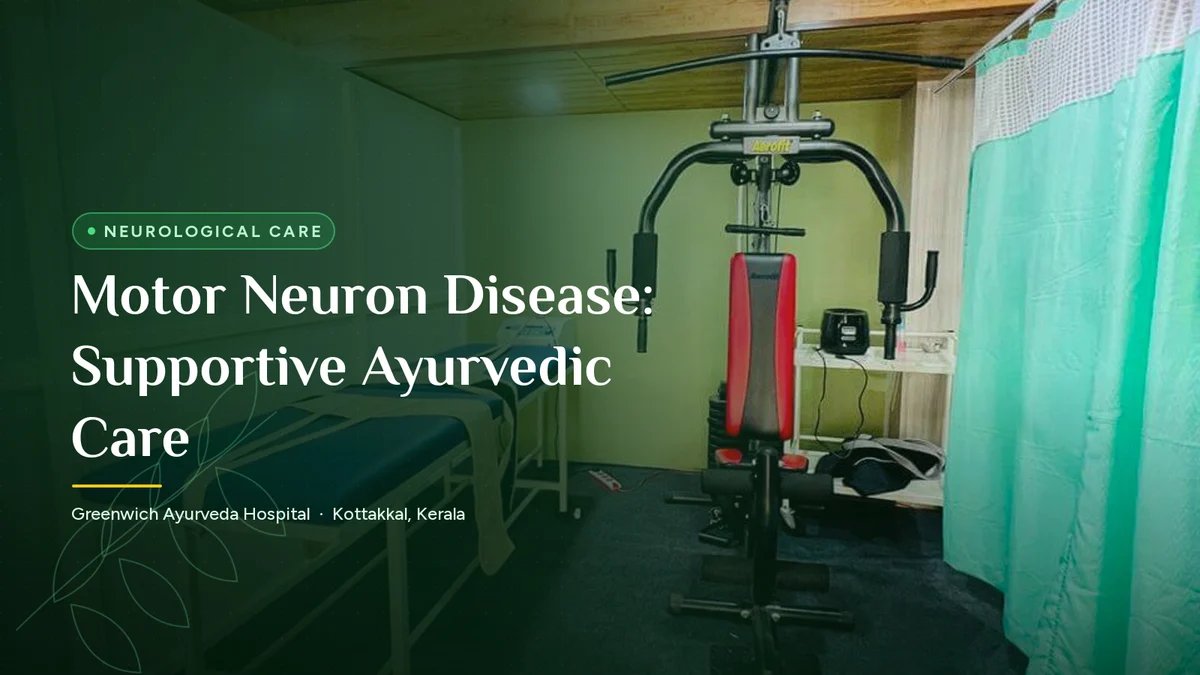
MND care must be multidisciplinary. Our physiotherapy team supports:
- Gentle range-of-motion exercises to prevent stiffness and contractures
- Exercise at an intensity that maintains function without exhausting the muscles
- Mobility aids, positioning and fall prevention
- Breathing exercises, with close attention to any breathing difficulty
Nutrition and swallowing
Weight loss is common and harmful in MND. We focus on:
- Calorie-rich, easy-to-swallow foods such as soft rice preparations, soups, porridges and ghee
- Adjusting food texture if swallowing becomes difficult
- Encouraging families to discuss swallowing assessment and feeding options with their neurology team early
Warning signs that need specialist attention
Morning headaches, breathlessness when lying flat, choking on food or drinks, and repeated chest infections should always be reported to your neurologist promptly.
What Can Families Expect?
Every person with MND is different. With supportive care, many patients and families report:
- Less pain from cramps and stiffness
- Better sleep and reduced anxiety
- Improved appetite and comfort
- A sense of being actively cared for, which matters enormously
We will not promise to stop or reverse progression. We will promise honest communication and compassionate care.
Continue Your Neurology Care
Medicines such as riluzole and specialist services, including respiratory and nutrition support, are important parts of MND management. Please continue them. Our team works alongside your neurologist, not instead of them.
Supporting the Family Too
MND affects the whole household. During a programme at our Kottakkal hospital, caregivers can stay with the patient, learn safe handling and massage techniques, and simply rest in a calm environment.
If you would like to explore supportive care for a loved one, contact our team. You may also find our article on neurological disorder treatment helpful.
This article is for general information only. It does not replace advice from your neurologist or palliative care team.