
Anyone who lives with psoriasis knows how exhausting it can be: the itching, the scaling, the cycle of flare-ups and the emotional toll of visible patches. Creams and other treatments can help, but many people still look for an approach that addresses why their skin keeps flaring.
At Greenwich Ayurveda Hospital, Kottakkal, our psoriasis treatment looks beyond the skin to digestion, metabolism, stress and lifestyle.
What Is Psoriasis?
Psoriasis is a chronic, immune-mediated condition in which skin cells multiply much faster than normal. Instead of shedding gradually over about a month, new cells pile up within days, forming thick, red or silvery, scaly patches. It is not contagious.
Common types of psoriasis
- Plaque psoriasis: raised, scaly patches on elbows, knees, scalp and lower back; the most common type.
- Scalp psoriasis: thick scaling that can look like severe dandruff.
- Guttate psoriasis: small, drop-shaped spots, often after a throat infection.
- Palmoplantar psoriasis: affecting the palms and soles.
- Nail psoriasis: pitting, discolouration or thickening of the nails.
Some people also develop psoriatic arthritis, with painful, swollen joints. This should always be evaluated by a doctor.
Common Triggers
- Emotional stress
- Infections, particularly throat infections
- Skin injury, scratching or sunburn
- Cold, dry weather
- Alcohol and smoking
- Certain medicines
- Irregular diet and poor digestion
The Ayurvedic View: Kitibha and Ekakushta
Ayurveda describes psoriasis-like conditions under Kushta (skin diseases), particularly Ekakushta and Kitibha. These are understood mainly as an imbalance of Vata and Kapha, with involvement of the blood (Rakta), skin (Twak) and lymph (Rasa).
A key idea is Viruddha Ahara, incompatible food combinations, along with weak digestion and stress. These are thought to produce toxins (Ama) that disturb the blood and show up on the skin. Treatment therefore works on three levels:
- Cleansing the accumulated doshas and toxins
- Calming the skin, the mind and inflammation
- Correcting diet and lifestyle to prevent recurrence
Ayurvedic Treatment for Psoriasis
Snehapana and Virechana
Patients first take medicated ghee in increasing doses (Snehapana), followed by oil massage and steam, and then Virechana (therapeutic purgation). Virechana is one of the most important procedures in Ayurvedic skin care, as it clears excess Pitta and toxins. It is part of a broader Panchakarma programme.
Takradhara
Medicated buttermilk, prepared with herbs such as Amalaki (Indian gooseberry), is poured in a steady stream over the forehead or body. Takradhara is especially valued for scalp psoriasis, stress and sleep disturbance, as it has a cooling, calming effect.
Medicated oils and external applications
Herbal oils such as those prepared with Wrightia tinctoria (Dhoodhi or Pala Indigo), a traditional Kerala skin herb, are applied to soften plaques and reduce scaling and itching.
Lepa (herbal pastes)
Cooling herbal pastes may be applied to affected areas to soothe inflammation.
Internal herbal medicines
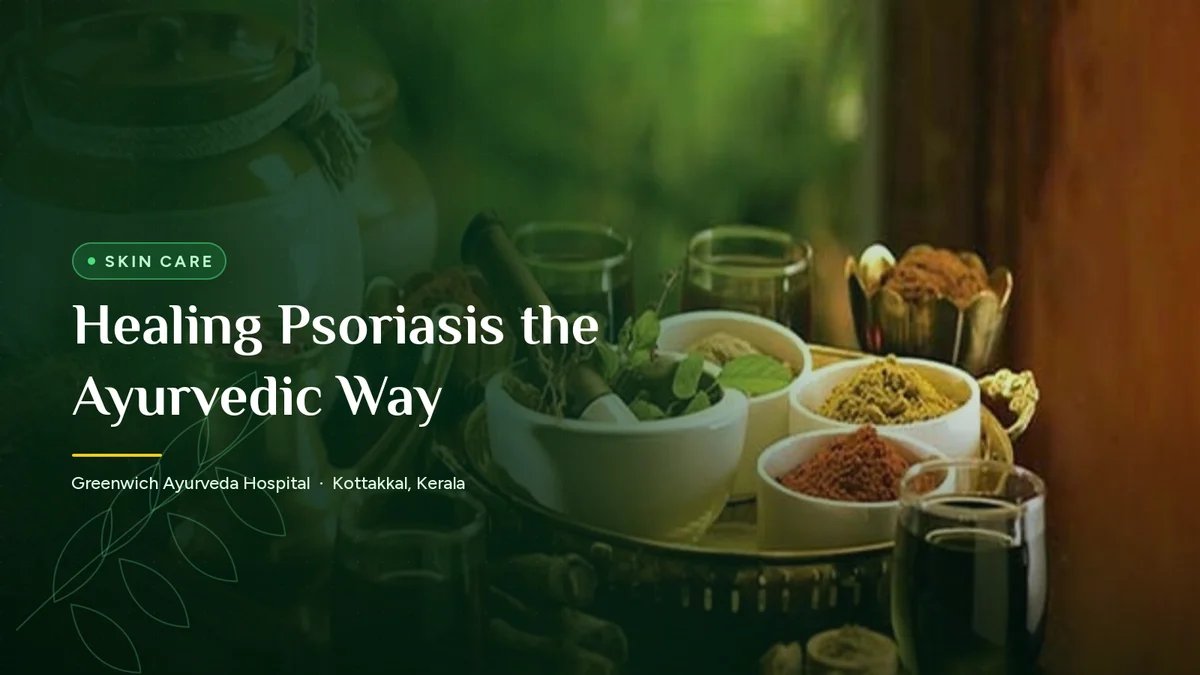
Classical preparations based on herbs such as Neem, Manjishta, Guduchi, Khadira and Turmeric are prescribed to support blood purification and immune balance.
Shirodhara for stress
Because stress is such a strong trigger, mind-calming therapies like Shirodhara are often included.
Diet for Psoriasis: What Ayurveda Recommends
Favour:
- Freshly cooked, light meals with plenty of vegetables, especially bitter ones such as bitter gourd and snake gourd
- Green gram, old rice, wheat and barley
- Turmeric, coriander and cumin in cooking
- Enough water through the day
Limit or avoid:
- Combining fish and milk, or milk with sour or salty foods, which are classic incompatible combinations
- Excessive sour, salty, spicy and fermented foods
- Red meat, seafood, alcohol and very oily, fried food
- Curd at night
- Packaged and processed foods
Lifestyle Tips That Make a Difference
- Keep the skin moisturised with gentle, fragrance-free or prescribed oils.
- Avoid scratching and picking at scales, which can trigger new patches.
- Use lukewarm water for bathing, not very hot water.
- Get gentle morning sunlight, but never let your skin burn.
- Practise daily stress relief such as walking, yoga, pranayama or meditation.
- Sleep well and keep regular meal times.
- Avoid smoking and alcohol.
How Long Does Ayurvedic Psoriasis Treatment Take?
An in-patient programme usually lasts 14 to 21 days, followed by several months of home medicines and diet. Psoriasis is chronic, so the aim is longer remissions and milder flare-ups. Results vary, and consistency with diet and medicines after the programme has a big influence on long-term success.
Will Psoriasis Come Back?
Psoriasis can recur, especially when triggers return. Many patients find that, with Ayurvedic care and sustained lifestyle changes, flare-ups become less frequent and less severe. Regular follow-up helps us adjust medicines as your skin changes.
Start Your Healing Journey
If psoriasis is affecting your comfort and confidence, book a consultation with our physicians in Kottakkal. Please bring details of your current treatments, and do not stop prescribed medicines without discussing it with your doctor.
This article is for general information and is not a substitute for professional medical advice.